
The Best Budget App for Irregular Income: Freelancer Edition 2026
4.7/5 Perch Score
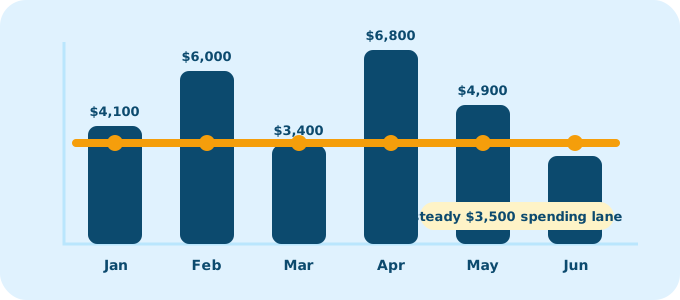
Variable pay changes the budgeting question. A salaried household asks, “Where should this month’s income go?” A freelancer must first ask, “Which month does this payment belong to?” We reviewed the leading options around that second question, using six months of uneven deposits ranging from $2,900 to $6,800 and invoice dates from January 12 through June 29, 2026.
Why YNAB wins for uneven paychecks
YNAB’s strongest feature is almost stubbornly simple: dollars do not enter the plan until they enter your account. You give each available dollar a job, fund the nearest obligations, and stop when the money runs out. That removes optimistic invoices and verbal promises from the budget. For a freelancer, this is not merely tidy accounting; it is protection against spending June’s promised income in May.
The app also makes underfunded categories visible without calling the whole month a failure. A $5,700 payment can cover taxes, rent, software, groceries, and part of next month. A later $900 payment can finish the buffer. YNAB requires more decisions than PocketGuard or Simplifi, especially during setup, but those decisions reveal exactly how long today’s cash must last. Our broader budgeting app guide explains why that clarity matters more than a crowded feature list.
The buffer logic that makes any app work
Start with an income floor, not an average. Take your three lowest ordinary months from the last year, exclude true emergencies, and use the middle figure as a conservative planning number. Then total essential personal costs, essential business costs, and a realistic minimum debt payment. The gap between that total and one month of costs is your first buffer target.
Here is the low-month test we used on July 1, 2026. The freelancer had $4,600 available after moving tax money to a separate account. We funded an ordinary $3,500 month and left $1,100 for August. The point is not to smooth the income chart; it is to smooth what leaves the spending account.
| July assignment | Amount | Running cash left |
|---|---|---|
| Spendable cash received | $4,600 | $4,600 |
| Housing and utilities | $1,650 | $2,950 |
| Food, transport, insurance | $1,150 | $1,800 |
| Business software and fees | $450 | $1,350 |
| Flexible spending | $250 | $1,100 |
| Held for August essentials | $1,100 | $0 unassigned |
Repeat this after every payment. Once the “next month” category reaches $3,500, send extra cash toward a two-month buffer, retirement, or a slower-season fund. Keep tax reserves outside the spendable pool. If “available,” “assigned,” and “activity” feel too similar at first, our plain-language money glossary is a useful companion.
Good alternatives, with gentler tradeoffs
PocketGuard is the easiest alternative for someone who will not maintain detailed categories. Its safe-to-spend view is useful after bills and goals are accounted for, but it can make a strong month look freer than it really is unless the next-month buffer is treated as a firm goal. Simplifi offers flexible watchlists and projected cash flow, which suit freelancers who want visibility without full zero-based budgeting. Forecasts are helpful, but overdue invoices should never be treated as settled cash.
Monarch Money is the better household option when a partner needs shared visibility across accounts and goals. Its broad dashboard is calmer than a spreadsheet, though solo freelancers may find it more system than they need. For a wider view of the category, see our 2026 app rankings.
If a paid subscription feels too heavy before your buffer exists, velmato’s free AI budgeting app is a reasonable low-commitment place to test automated categorization; its lighter structure is calmer, but it does not replace YNAB’s deliberate assignment of irregular cash.
What flows in
- Budgets only cash that has actually arrived
- Makes next month’s shortfall visible today
- Handles several small client payments cleanly
What flows out
- Needs regular hands-on category decisions
- First-week terminology takes patience
- Forecast lovers may miss a longer cash-flow view
Frequently asked questions
What is the best budget app for irregular income in 2026?
YNAB is our best overall choice because it budgets only money already received and makes future obligations visible. PocketGuard is easier for freelancers who mainly want a safe-to-spend number.
How large should a freelancer income buffer be?
Start with one month of essential personal and business costs. If invoices regularly arrive more than 30 days late, build toward two or three months without trying to reach that target in one leap.
Should freelancers budget gross or net income?
Budget spendable net income. When a client payment arrives, move the tax share and reimbursable business costs out first, then assign only the remainder to the household budget.
Verdict: 4.7/5 — structure without prophecy
YNAB is our 2026 freelancer pick because it refuses to build a lifestyle around money that may arrive late. The learning curve is real, and PocketGuard is kinder if detailed assigning makes you avoid the app. But for variable income, a little friction at payday creates calm between paydays. Build one month slowly, fund the future before upgrading the present, and let a high month feel useful rather than permanent.
Reviewed August 8, 2026, using six months of variable-income scenarios. App features and availability can change.